Live Chat
Skip to main content

MLITSD campaign aimed at protecting Ontario’s agriculture workers. Here’s what you need to know

Two agricultural workers in a greenhouse

To protect Ontario farms, we must protect Ontario farmers, their families, and their workers. That is why the Ministry of Immigration, Labour, Training and Skills Development (MLITSD) has begun an inspection campaign that focuses on the farming and agriculture sector. Since April 1st, inspectors have been visiting farms, greenhouses, and other agriculture services. “Agriculture services include crop and livestock management, farm equipment dealerships, and other suppliers,” says Kristin Hoffman, Health and Safety Consultant with Workplace Safety & Prevention Services (WSPS). “The scope of this campaign is much wider than the farm or greenhouse.”

Kristin explains that the purpose of this MLITSD campaign is to increase compliance with the Occupational Health and Safety Act (OHSA) and related regulations within the agriculture sector. To help keep everyone safe, inspectors will raise awareness of the main hazards at these workplaces and make sure operators, supervisors, and workers all understand and fulfill their legal responsibilities. “Agriculture continues to be among the top contributors to fatalities and critical injuries in Ontario. Data from the MLITSD shows that 12 agriculture workers died and 67 suffered a critical injury in 2024 to 2025,” says Kristin, emphasizing that even one worker death or injury is too many.

What are the top hazards?

Regardless of the specific type of farm, greenhouse, or agriculture service, there are some general high-risk activities that can lead to serious injuries or death if unsafe practices are used. “Operating vehicles and machinery are a common activity that puts workers at risk if not done properly,” says Kristin. “Whether it’s a tractor out in the field or a lift truck in a greenhouse, being crushed or struck by equipment or material is a top hazard in the agriculture sector.” Other top hazards include falls from heights and at the same level, working with equipment and tools such as shears or knives, and working with livestock. “These hazards can lead to amputations, severe lacerations, and fractures,” says Kristin.

Overexertion from manual material handling, repetition, and awkward postures is another high-risk activity present in most agriculture operations. While rarely fatal, this type of recurring exposure often leads to musculoskeletal disorders (MSD). “Workers who have suffered from an MSD understand how debilitating these types of injuries can be. Living with constant pain and limited mobility negatively impacts a worker’s day-to-day life,” says Kristin.

What will inspectors look for?

MLITSD inspectors will visit farms, greenhouses and other agriculture services as part of this inspection campaign until March 31st, 2027. “They have the right to enter workplaces, and they will comply with any biosecurity measures,” reminds Kristin. Here are a few things you can do to prepare your workplace for a visit.

  1. Complete a hazard assessment and implement controls. To protect workers, first you must identify the hazards to which they will be exposed. The best way to do this is to complete a detailed hazard assessment for your workplace. “For example, think about handling chemicals, operating machinery, entering confined spaces, heat and cold stress, and air quality exposures. Go through each task workers perform, identify the associated hazards, and outline how you are going to control them,” says Kristin, reminding employers that this includes MSD hazards.
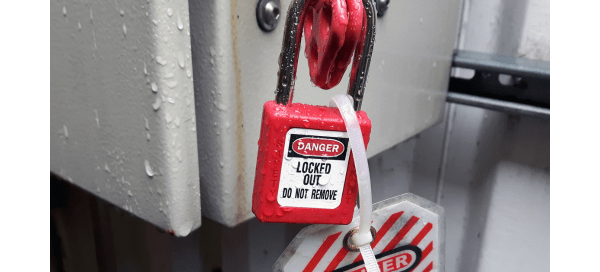
  2. Ensure all machines are properly guarded, and lockout procedures are used. Inspect each piece of machinery at your workplace to ensure that guards are in place and in good working order. Blockout, lockout and tagout machinery to protect workers from hazardous energy during maintenance and repair.
  3. Remove tripping hazards. Remove items such as hoses, containers, material, and electrical cords from work areas and walkways. Reorganize how workspaces are set up to eliminate the need for hoses or cords to stretch across work areas.
  4. Gather and organize maintenance records. Inspectors may ask to see proof that vehicles, equipment, and other machinery have had regular maintenance performed on them. Have these records ready.
  5. Have training documentation readily available. “You must be able to demonstrate that every reasonable precaution has been taken to protect the worker. This means that each worker must receive training related to the tasks they perform,” says Kristin. “For example, every worker who operates equipment, such as a tractor or forklift, must be trained in its safe operation. If you have workers who refuel vehicles with diesel, it is reasonable to provide them with training on how to handle, store, transport, and dispose of the fuel.” In addition to the MLITSD’s mandatory Worker Health and Safety Awareness Training, ensure that other required training is up-to-date and the documentation is available. 
  6. Demonstrate due diligence for temporary foreign workers. If your workplace employs workers whose first language is not English, you need to provide training in a language they will easily understand. Be prepared to show inspectors what steps you have taken to ensure temporary foreign workers have understood the training they have received. 

How WSPS can help

Webinar

Join us for a free Safety Connection Webinar on June 10th, 2026. Our health and safety experts will discuss what to expect during this inspection period, as well as best practices related to exposures and risks.

Resources

  • Agriculture Small Business Checklists - Use these safety checklists to review your health and safety requirements, including training, posting, health and safety duties requirements and more.  Select your business size: 1-5 employees, 6-19 employees, or 20-49 employees.
  • Keep farm workers safe by getting back to basics - Learn what health and safety laws and guidelines farmers need to follow to protect workers. Get tips on managing risks and utilizing your JHSC or HSR to keep your workplace safe.
  • Farm Safety Roundup  Podcast - Tune in to the Farm Safety Roundup Podcast for helpful guidance to safeguard farm workers, prevent illness and injury, and meet occupational health and safety responsibilities to keep every worker healthy and safe, every day.
  • Health & Safety Handbook Generator -  Your one-stop solution for simplifying occupational health & safety compliance at your business within minutes.
  • Workplace Violence Risk Assessment Tool -  This online tool gives you a streamlined, practical way to meet your legal obligations and strengthen the safety of your workplace.

Free eCourses

Select WSPS health and safety eCourses are now free until September 30, 2026. Strengthen your team’s safety skills and reduce costs with no-cost training, including:

  • Lockout Tagout
  • Tractor Safety
  • Health & Safety Awareness for Ontario Workers and Supervisors
  • Ladder Safety

 The information in this article is accurate as of its publication date.