Live Chat
Skip to main content

MLITSD noise inspections underway: What employers need to know

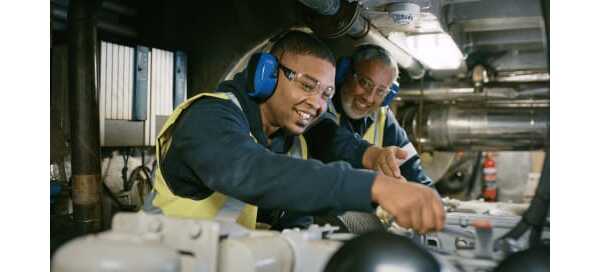
Worker using noise protection.

Ministry inspections are now underway to determine compliance with Noise Regulation 381/15 under the Occupational Health and Safety Act (OHSA). “The inspections are being carried out in response to the continued high number of noise-induced hearing loss claims in Ontario, and will help ensure workers are not overexposed to noise,” says Toni Volpato, WSPS Specialized Consultant (Occupational Hygiene).

From April 1, 2026, to March 31, 2027, occupational hygienists from the Ministry of Labour, Immigration, Training and Skills Development (MLITSD) are visiting workplaces to verify that employers:

  • have implemented the required control measures to ensure worker noise exposures do not exceed the regulated limit of 85 dBA over 8 hours 
  • are prioritizing engineering controls and work practices over hearing protection to reduce noise levels 

Noise-induced hearing loss a problem in Ontario workplaces

In 2025, there were 8,312 claims for noise-induced hearing loss, according to the Workplace Safety & Insurance Board (WSIB). Toni speculates that this continuing high number of claims may be linked to:

  • an unclear understanding of the employer’s duties under the noise regulation
  • failure to properly assess noise exposure in the workplace – it must be carried out by an occupational hygienist or other qualified person. 
  • overreliance on hearing protection instead of using engineering controls as the regulation prescribes. “Engineering controls are the preferred solution because they eliminate noise at the source,” says Toni. “Hearing protection may be ineffective because it relies on the device being correctly selected, properly fitted, and consistently worn.”
  • inadequate training for workers in the care and use of hearing protection devices. “Even small errors in fit or use can drastically reduce its effectiveness.”

Understanding employer’s duties under Noise Regulation 381/15

Regulation 381/15 requires employers to: 

  • ensure workers are not exposed to sound levels greater than 85 dBA over 8 hours. “At WSPS, we recommend reducing noise levels to below 80 dBA as a best practice. It is generally accepted that levels above 80 dBA have the potential to harm hearing.”
  • use the most effective control methods first to reduce noise levels – that is, engineering controls and work practices. “Engineering controls include removing/replacing noisy equipment, purchasing quieter equipment, modifying the noise source, and installing sound-absorbing materials, to name a few. Work practices change how or when the work is done. For example, limiting the time workers spend in noisy areas, increasing the distance from the noise source, and ensuring equipment is properly maintained.”
  • hearing protection is a key part of workplace safety, but it doesn’t address the source of noise.  “The regulations say hearing protection can only be used if the other control methods are not in existence or not reasonable to do because of the nature of the work.”
  • choose the right hearing protection. “Selection of hearing protection must be based on the actual noise levels workers are exposed to, how much the device reduces the noise, and the manufacturer’s information on its use and limitations,” notes Toni.
  • train workers on the use and care of hearing protection. Training should also discuss the limitations of the device, how to get a proper fit, and how to inspect, maintain and clean the device. “An ill-fitting protector won’t seal properly, letting noise in and reducing protection for the worker.”
  • post clear warning signs at entrances to areas where noise is above 85 dBA. 

When is a noise survey/assessment required?

To comply with their duties, employers are required to take all measures reasonably necessary to protect workers, says Toni. “This often involves assessing noise levels to determine if the 85 dBA limit is being exceeded.”

A noise assessment may be necessary if: 

  • the workplace is noisy, but there is no existing data to verify compliance with the 85 dBA limit
  • there are indications that noise levels are approaching the exposure limit – for example, workers standing a meter apart find it difficult to speak to each other at a normal volume 
  • workers complain about noise or show early signs of hearing loss
  • new equipment or processes are introduced that may change noise levels 

“The MLITSD inspector can also require the employer to have a noise assessment conducted by a qualified professional at the employer’s expense,” notes Toni. (See section 54 (l)(f) of the OHSA). 

“Noise needs to be measured by someone who has the proper knowledge, training, and experience and uses the right calibrated equipment,” notes Toni. “That way, you can be confident in your results and truly understand what noise levels workers are being exposed to.” 

How can your workplace prepare for the inspection?

1. Understand your legal requirements under Noise Regulation 381/15

2. Get help if you need it.  WSPS occupational hygienists are on hand to assist you. (See  How WSPS can help)  

3. Have your documentation ready. The MLITSD's occupational hygienist may ask for: 

  • previous noise exposure assessment reports 
  • details about the selection of control measures. “Records should demonstrate that engineering controls were considered, and why they were not adopted if hearing protection is being used instead.”
  • hearing protection selection records: “Documents showing that the type of hearing protection being used is sufficient to reduce the worker’s exposure to below the 85 dBA limit.”
  • training records. Proof that workers received training on how to select, use, and maintain hearing protection according to the manufacturer’s instructions

4. Verify that warning signs are posted at every entry point to areas where the sound level regularly exceeds 85 dBA. 

5. Ensure your joint health and safety worker representative (in workplaces with more than 20 employees) or health and safety representative (in workplaces with 6-19 employees) is available to accompany the Ministry’s occupational hygienist on the walkthrough portion of their inspection.

How WSPS can help

Resources

Live Webinars - Safety Connections

Consulting 

WSPS consultants are available to conduct a noise exposure assessment in your workplace and help you develop a hearing conservation program.  

Training 

The information in this article is accurate as of its publication date.