Live Chat
Skip to main content

Smarter tools, safer work: The tech innovations reshaping landscaping

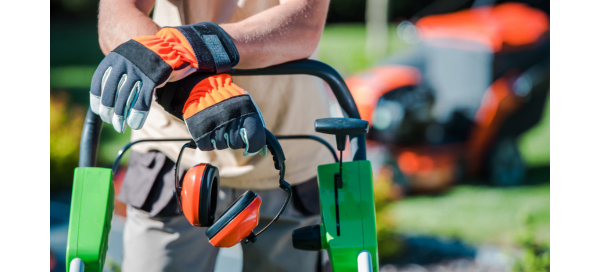
Photo of a landscaper wearing protetive gloves and holding hearing protection.

Originally published in Landscape Trades Magazine

The tools landscapers rely on are smarter, faster and more powerful than ever and that’s changing what safety looks like in the field. Even when crews follow every procedure and supervisors lead by example, incidents still happen. According to Michael Wilson, Health and Safety Consultant at Workplace Safety and Prevention Services (WSPS), the latest technological advancements in tools and equipment may be able to help close that gap. Wilson specializes in machine and robotics safety. He sees promising advances in design that integrate safety into how tools are started, operated and maintained in the field.

“Falls and being struck by equipment, vehicles, or debris continue to be among the top hazards in landscaping,” says Wilson. He knows that while detailed hazard assessments and proper training set everyone up for success, human behaviour can be inconsistent or unpredictable at times. “This is particularly true when you factor in fatigue from long hours, stress and anxiety, or complacency after having performed the same task many times,” he says.

Add to that the potential for equipment to malfunction, and it is easy to see how injuries can occur on jobsites. Imagine a worker on an elevated work platform, cutting a large tree branch with a chainsaw, when the chainsaw suddenly kicks back and causes the worker to lose their footing. Or picture a worker using a gas-powered hedge trimmer to clear overgrown shrubs along a property line; the blade catches on a thick stem, binds for a moment, then releases suddenly, causing the worker to lose their grip. “These are familiar scenarios to most landscapers,” says Wilson.

In an effort to reduce the risk to workers, leading manufacturers are designing tools with these risks in mind. They are using the latest technology to build safeguards into their products, which may reduce or even eliminate some common hazards. However, Wilson also points out that new technology can introduce new hazards that need to be addressed.

“In addition to understanding how a safety feature works, it is very important for landscapers to understand their limitations,” he explains. “Workers need experiential, hands-on training on new tools and equipment, as well as a theoretical overview of how a specific technology functions.”

Smarter power tools

With their force and speed, power tools can cause significant harm in an instant, leaving workers no time to react. In some cases, the injury may occur before the worker even realizes what went wrong. Pinch points, bind-ups, and contact with moving parts are the main culprits when using power tools. Melissa Buttigieg, Product Manager, Safety, has been working with her team at Milwaukee Tool on ways to minimize these risks. They introduced AUTOSTOPTM technology to their products.

“The idea behind it is simple,” she explains. “When something goes wrong, the tool should be able to react immediately before a split-second turns into a serious injury.” The system detects sudden bind-ups or abnormal movement and automatically shuts the tool down. It does not rely on the worker to react.

Landscapers encounter situations daily where this matters, such as hitting an unexpected obstacle, working at awkward angles, or dealing with repetitive motions where a tool can suddenly twist or jerk.  “AUTOSTOP™ reflects how we think about safety not as a feature you add at the end, but something engineered into the tool from the beginning,” says Buttigieg.

Another good example of engineering safety technology into a power tool is the DC-250 Smart Advance electric saw from Rubi. Similar to Milwaukee’s AUTOSTOPTM, the DC-250 has an integrated protection system that stops the motor immediately if the blade jams or becomes dull. It also has an intelligent automatic feed system, which allows the worker to adjust the cutting speed in real time to match the material and load, creating safer working conditions. 

Robotic stability

Being struck by or crushed by mobile equipment, such as track loaders or skid steers, is another leading cause of injury among landscapers. Rollovers are often what leads to these types of injuries, from driving on sloped, unstable, and uneven ground.

“Roll Over Protection Systems can mean the difference between life and death if a rollover occurs while operating equipment,” says Wilson. This technology has been incorporated into tractor design for the agriculture sector, but is now becoming more common on other, smaller mobile equipment. “Roll Over Protection Systems create a safe zone around the operator so the machine can’t crush them,” he explains. 

While ROPS technology is being incorporated into more mobile equipment designs, Kubota is moving in a different direction with the Kubota All Terrain Robot (KATR). The KATR is a compact, four-wheeled robot designed to provide a stable platform, even on slopes and rugged terrain, by hydraulically bending and extending its four legs. It can transport loads over uneven terrain without tilting the cargo deck. What is even more remarkable is that it does all of this without a rider.

The KATR is designed to be operated remotely, which eliminates the possibility of a driver being crushed in a rollover. According to Brett McMickell, Kubota North America's Chief Technology Officer and Executive Director of North American R&D, Kubota is continuing to innovate in this direction. “At CES 2026, Kubota unveiled the KVPR: an autonomous, transformer-style robot that expands, contracts, and moves on every axis, delivering multiple machine capabilities in a single solution,” he says.

Managing change with training

While these technological advancements have the potential to make work safer for landscapers, it really comes down to training. “Users must be properly trained on all aspects of new equipment,” reminds Wilson. “Equipment-specific training is critical to ensure workers understand the technology’s capabilities and limitations.”

Wilson cautions that over-reliance on automation or built -in safety features can lead to complacency. Real progress, he says, happens when new technology is paired with proper training and detailed, equipment-specific safe work procedures, allowing innovation to play a meaningful role in the path forward to safer workplaces.